Harvest & health
This silo covers two things that arrive after your first season: harvesting the honey your colony has to spare, and keeping that colony healthy enough to give you a harvest at all. The harvest equipment is straightforward gear, compared here on the specs that matter. Hive health is where I stay carefully in my lane: I list the monitoring and treatment options that exist, and I route every clinical question to your state apiarist and the manufacturer's instructions. Specs are verified against manufacturer and Amazon listings; consult your state apiarist for disease and treatment.
Harvest is a year-two event
Before anything else: you do not harvest honey in your first year. A new colony needs every drop it makes to survive its first winter, and taking honey in year one is the most common way beginners lose a hive. Your first real harvest comes in your second summer, once the colony is established and has stored a surplus beyond what it needs. That is why the harvest gear below is a year-two purchase, and why many beginners borrow or share an extractor through their local club for their first harvest rather than buying one. The first-year guide lays out the full season timeline.
The honey extractor
An extractor is a drum that spins frames of uncapped honeycomb so centrifugal force flings the honey out against the walls, where it runs down to a tap at the bottom — leaving the comb intact for the bees to refill. The specs that decide which one suits you are frame capacity (a 2-frame extractor is plenty for a beginner with one or two hives; a 4-frame speeds up a bigger harvest), drive (manual hand crank versus electric motor), and construction (food-grade stainless steel is the standard worth holding out for). These are exactly the columns the best honey extractor guide compares.
Uncapping and bottling
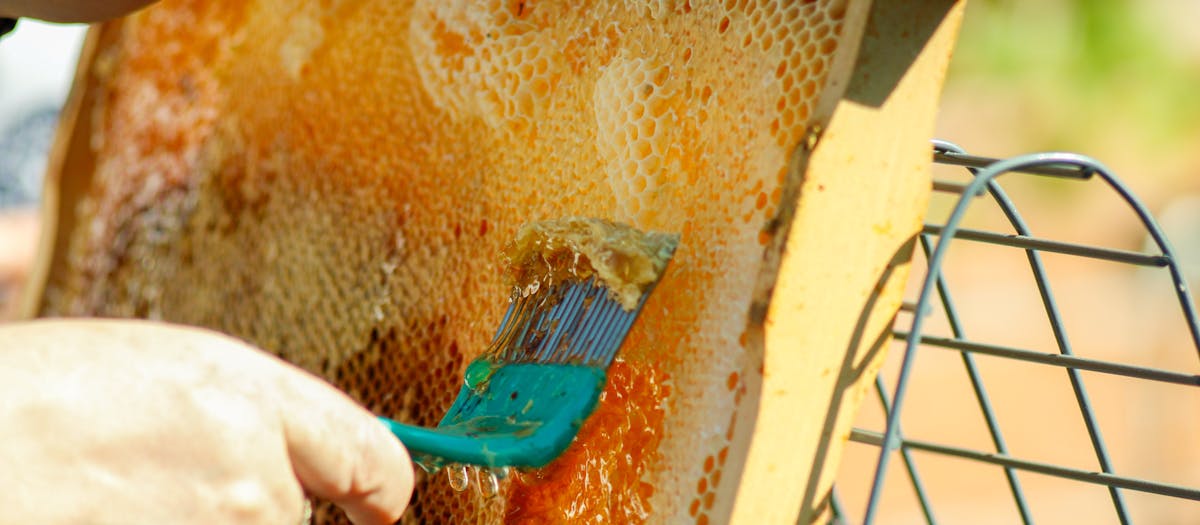
Two smaller jobs bracket the extracting. Before you spin, you uncap the comb — slicing off the thin wax caps the bees seal honey under — with an uncapping knife, fork or roller over an uncapping tank that catches the wax and drips. After you spin, you bottle: the honey runs through a strainer to remove wax bits, settles, and then fills jars. Neither needs expensive gear for a small first harvest. Dedicated guides to uncapping tools and bottling supplies land in a later batch.
Hive health and varroa monitoring
Keeping a colony alive is mostly good management — a strong queen, enough room, enough food — plus monitoring for varroa mites, a parasite that affects nearly all US colonies and is now a normal part of beekeeping. What I can tell you factually is that monitoring tools exist: an alcohol-wash or sugar-roll test kit lets you count mites on a sample of bees, and sticky boards under a screened bottom board catch fallen mites for a rough count. Treatment products also exist, sold under their own brand names.
What I will not do — and what no buyer-guide site should do — is tell you whether your colony is sick or what to dose it with. Mite thresholds, treatment timing and product choice depend on your region, your inspection results and the season, and getting them wrong harms bees. Take any monitoring number to your state apiarist and your local club, and follow the manufacturer's instructions on any treatment product to the letter. A product-only varroa monitoring reference, with those same links, lands in a later batch.
Featured guides
The current published guides in this silo. More land each batch.
Landing next: Varroa monitoring tools (product reference, routed to your state apiarist), Best uncapping tools, and Honey bottling supplies.