Beehives
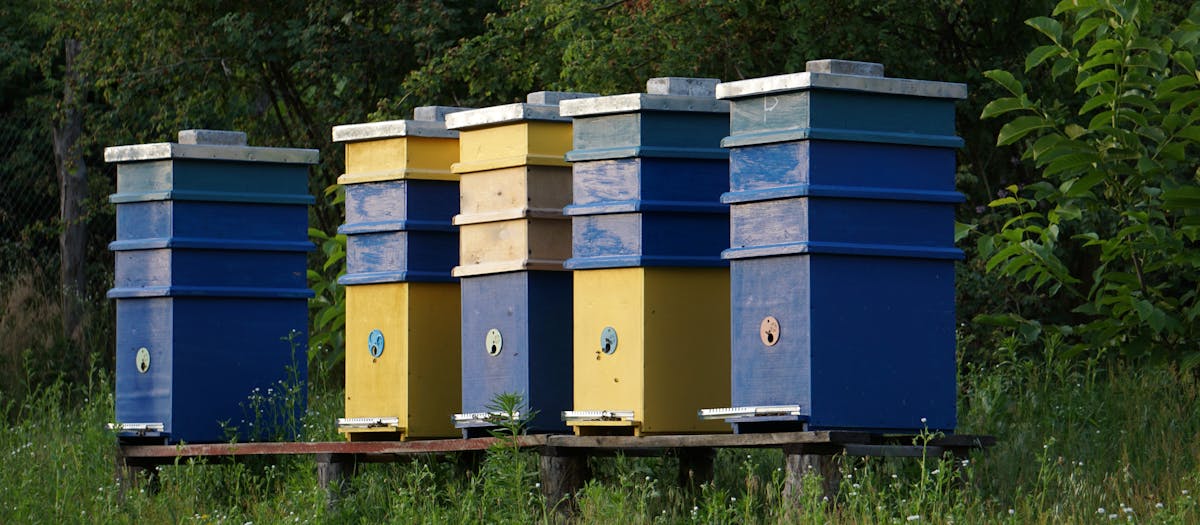
The hive is the biggest single decision and the biggest single cost of your first year. Get it right and everything else follows; get it wrong and you fight your own equipment all season. This silo compares the four hive types a beginner will hear about — Langstroth, top bar, Warré and Flow — and then works through the two choices that trip people up: 8-frame versus 10-frame, and deep versus medium boxes. Specs are verified against manufacturer and Amazon listings; consult your state apiarist for disease and treatment.
The four hive types
Almost every beginner question about hives comes down to picking among four styles. Here is what each one is, with the trade-off that matters for a first year.
Langstroth — the American standard
The stacked-box hive you picture when you picture a beehive. Bees build comb on removable frames inside boxes you stack as the colony grows. Its advantages for a beginner are decisive: parts are interchangeable and sold everywhere, every club and mentor uses it so help is easy to find, and you inspect one box at a time. The trade-off is that a full box of honey is heavy to lift. For most US beginners this is the right default.
Top bar — no heavy lifting, less support
A long horizontal hive where bees build comb hanging from bars across the top, with no frames or foundation. Nothing to stack means no heavy lifting, which suits anyone with back trouble. The trade-offs: comb is more fragile to handle, parts do not swap with Langstroth gear, and fewer local mentors run them, so you get less hands-on help when you need it.
Warré — vertical and low-intervention
A vertical stack of smaller boxes managed hands-off to mimic a hollow tree. Some experienced keepers love the philosophy. For a first year the catch is that low intervention also means low visibility, and a beginner learns fastest by looking inside the hive often. Not where I would start.
Flow Hive — clever tap, conventional beekeeping
A Langstroth-style hive with special frames that let honey drain through a tap without opening the box. The harvesting is genuinely clever and the build quality is good. But it does nothing to make the hard part — managing a healthy colony — easier, and it costs considerably more. Buy it because you like the harvesting feature, not because you expect it to shortcut the beekeeping.
8-frame versus 10-frame
Within Langstroth, the first sub-choice is how wide the boxes are. A 10-frame box holds more bees and more honey, which means a bigger colony and fewer boxes — but a full one is heavy. An 8-frame box holds less and is noticeably lighter to lift, which is why many keepers, myself included, run 8-frame boxes to save their backs. If lifting forty-plus pounds repeatedly is a concern, go 8-frame. If you want maximum colony size and do not mind the weight, 10-frame is the traditional choice.
Deep versus medium boxes
The other sub-choice is box height. Deep boxes are tall and traditionally used for the brood nest at the bottom of the hive. Medium boxes are shorter and lighter, traditionally used for honey supers on top. A popular beginner strategy is to standardise on all medium boxes — every frame and box becomes interchangeable, every full box is a manageable weight, and you never have to keep two sizes of equipment. It costs slightly more boxes overall, but the simplicity is worth it for a first year.
A note on materials and foundation
Most starter hives are pine, which is affordable and easy to repair; cedar costs more and resists weather better. For the comb, you will choose between wax foundation (traditional, what bees take to most readily) and plastic foundation (more durable, easier to handle, what I use). Either works for a beginner. These are exactly the specs the best beehive for beginners guide compares side by side.
Featured guides
The current published guides in this silo. More land each batch.
Landing next: Langstroth hive complete guide, Best beehive starter kit, Flow Hive review, and Top bar versus Langstroth.